from bedroom beats to 100 million streams
i started making beats in my bedroom at 17. now i have 100 million streams on Spotify, co-founded a record label, built a mastering studio, and shipped 6 audio plugins.
i was 17 and had absolutely no idea what i was doing.
i had a laptop, a pair of headphones, and a pirated copy of FL Studio. i started making beats — lofi stuff, ambient textures, the kind of music you put on when you're studying at 2am and need something that fills the silence without demanding attention.
i uploaded a few tracks under the name Peak Twilight. this was 2019. i expected maybe my friends would listen. maybe.
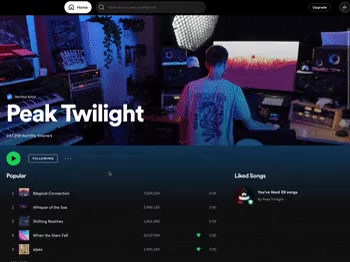
fast forward to today: 110 million+ streams on Spotify.
i still don't fully understand how that happened.
the early days
the first tracks were rough. i didn't know what compression was. i didn't know what EQ was. i just layered sounds until it felt right and hit export. looking back, some of those early tracks are embarrassing. but people listened. the playlists picked them up. the algorithm did its thing.
lofi was exploding in 2019. the "lofi hip hop radio - beats to relax/study to" live stream was cultural infrastructure at that point. and the genre was hungry for content. if your beats were decent and you got on the right playlists, listeners would find you.
mine were decent enough. they found me.
hitting a million monthly listeners
in 2021, i hit 1 million monthly listeners on Spotify. i was 19.
this is the part where i'm supposed to say i had a grand strategy. i didn't. i made music i liked, i put it on streaming platforms, and i tried to get it on playlists. that was the entire playbook.
what i did have was consistency. i released regularly. not on a rigid schedule, but enough that the algorithm kept recommending my tracks. and i paid attention to what resonated. which beats got saved to libraries. which ones got added to playlists. not to chase trends — but to understand what connected.
co-founding soothe records
in 2020, at 18, i co-founded Soothe Records. a lofi and ambient label.
the idea was simple: there were a lot of talented producers in the lofi space who didn't know how to navigate distribution, playlist pitching, or the business side of music. we could handle that for them while building a collective identity.
soothe records has now accumulated 30 million+ streams across its roster. we've released music from producers around the world — bedroom artists who just needed a platform and some structure.
building soothe studios
in 2022, we took it further and launched Soothe Studios — the first in-house mix and mastering studio specifically built for a lofi label.
most lofi producers don't have access to professional mastering. they export their tracks and upload them as-is. the difference between an unmastered and a mastered track is subtle but real — loudness, clarity, stereo width, how it sounds on different speakers.
we've mixed and mastered 150+ tracks through the studio. it's not a massive operation. it's not Abbey Road. but it gives our artists professional output quality without professional-studio prices.
the SRF feature
somewhere along the way, Swiss national television noticed. i got featured on SRF — not for code, not for cybersecurity, but for music. a Swiss kid making lofi beats in his bedroom that millions of people around the world were listening to.
that was surreal. my grandma called to tell me she saw me on TV. she still doesn't understand what lofi is, but she's proud.
building audio plugins
here's where music and code collide.
as a producer, i use plugins constantly — software that processes audio in your DAW. EQ, compression, reverb, saturation, stereo widening. but i kept running into the same frustration: existing plugins were either too complex for simple tasks or too expensive for what they offered.
so i started building my own. in C++. because apparently i hate myself.
i've shipped 6 audio plugins under Peak Plugins:
free plugins:
- Lofinator — single-knob lofi character. saturate, warmth, crush.
- Chill Pill — filter + chorus + reverb in one unit.
- Wideboi — mono-to-wide stereo processing using M/S techniques.
paid plugins:
- Thiccener ($9+) — saturation designed for thickness and punch.
- Clay ($9+) — four-knob audio sculpting: excite, smooth, texture, width.
- Canvas ($30+) — nine-processor audio character suite. the big one.
all of them are VST3 and AU, running on macOS and Windows.
the jump from web development to audio DSP is... significant. web development is forgiving. you can ship bugs and hotfix in minutes. audio plugins process samples at 44,100 times per second. a bug doesn't show a 404 — it makes a horrifying noise through someone's speakers at full volume.
i wrote more about the plugin journey in a separate post.
the tools behind the scenes
beyond plugins, i built tools for the label operations too:
- Soothe Discord Bot — manages the community, handles submissions
- Soothe Playlist Autorotator — automated Spotify playlist rotation so our curated playlists stay fresh without manual track swapping
these aren't glamorous. they're the plumbing that makes the operation run.
what i've learned
consistency compounds. 110 million streams didn't come from one viral track. they came from releasing regularly over 6 years. most individual tracks don't blow up. but each one adds to the catalog, and the catalog grows the audience, and the audience finds the new tracks.
own the infrastructure. co-founding the label and building the studio meant we controlled the pipeline. we didn't depend on external labels, external mastering engineers, or external playlist curators. that independence is worth more than any individual release.
build what you need. the plugins exist because i needed them. the discord bot exists because managing a community manually was unsustainable. the autorotator exists because swapping playlist tracks by hand was tedious. the best tools come from solving your own problems.
the overlap is the edge. being both a music producer and a software engineer isn't common. that intersection lets me build things that pure musicians can't and pure developers wouldn't think of. the audio plugins, the automation tools, the label infrastructure — all of it comes from sitting at that intersection.
the full picture
17-year-old me with a laptop and headphones could not have predicted any of this. 110 million streams. a record label. a mastering studio. 6 audio plugins. a feature on Swiss national television.
but also: it's still the same thing it was in 2019. making beats. putting them out there. seeing if they connect.
the scale changed. the process didn't.